Sign up at Binance · code XG188 · −20% trading-fee discount
→
Sign up at Binance · code XG188 · −20% trading-fee discount
→

An exchange's built-in grid bot doesn't need your computer on. A bot you run yourself does: home PC or VPS, and which terms to check before you rent one.
US stocks settle T+1. In a cash account you can reinvest sale proceeds that day; selling the new stock before settlement may get you a 90-day freeze.
If a SIPC-member broker fails, SIPC works to restore missing securities and cash, not market losses. The limit is $500,000, including $250,000 for cash.
FINRA replaced the PDT rule and its $25,000 minimum with an intraday margin standard on June 4, 2026. Brokers may keep the old rule until October 20, 2027.
Selling $10,000 of US stock carries a $0.206 SEC fee at $20.60 per million. TAF is $0.000195 per share, capped at $9.79, and paused for Oct–Dec 2026 trades.
Under T+1 a US stock's ex-dividend date is usually the record date, so buy by the trading day before it. Record date Monday, March 16: buy by Friday, March 13.
GOOGL is Alphabet Class A with one vote per share; GOOG is Class C with no vote. Dividends match. Kraken's GOOGLx and Ondo's GOOGLon both track Class A.
No daily price limit in US stocks: a 7%, 13% or 20% S&P 500 drop halts the market, and a stock stuck at its LULD band for 15 seconds pauses for 5 minutes.
A buy limit above the market, or a sell limit below it, fills on the spot.
Isolated margin caps the loss at one position’s margin; cross margin draws on your whole balance.
On Binance USDⓈ-M futures, losses past your margin usually go to the insurance fund, not you.
Perpetual futures never expire but involve funding payments; quarterly futures settle on a set date and have no funding payments.
The 1:1 claim is in writing, and the reserves endpoint opens without a login. Swap in the token you hold and go through the fields one at a time.
A receiving address and a token contract are not interchangeable. Match the ticker, the BSC network and the full contract, then read the wallet transfer limits; two public screenshots included.
Ordinary shares and depositary receipts sit in the same list. Read the ratio in the name first, then work out the depositary fee that can show up without any order.
Expiry won't bail you out. Read the state on your screen first, then the cutoff for closing, exercising and doing nothing; with the exercise time windows and a UTC conversion.
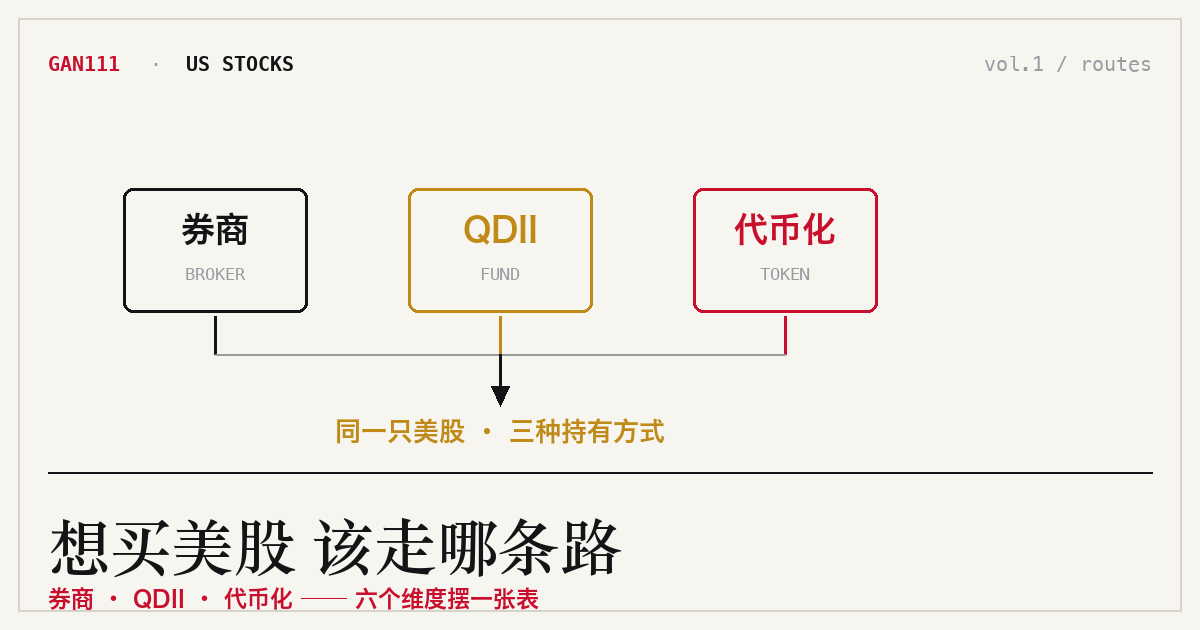
Three routes to the same exposure, compared across six dimensions — and the three situations where people pick the wrong one.
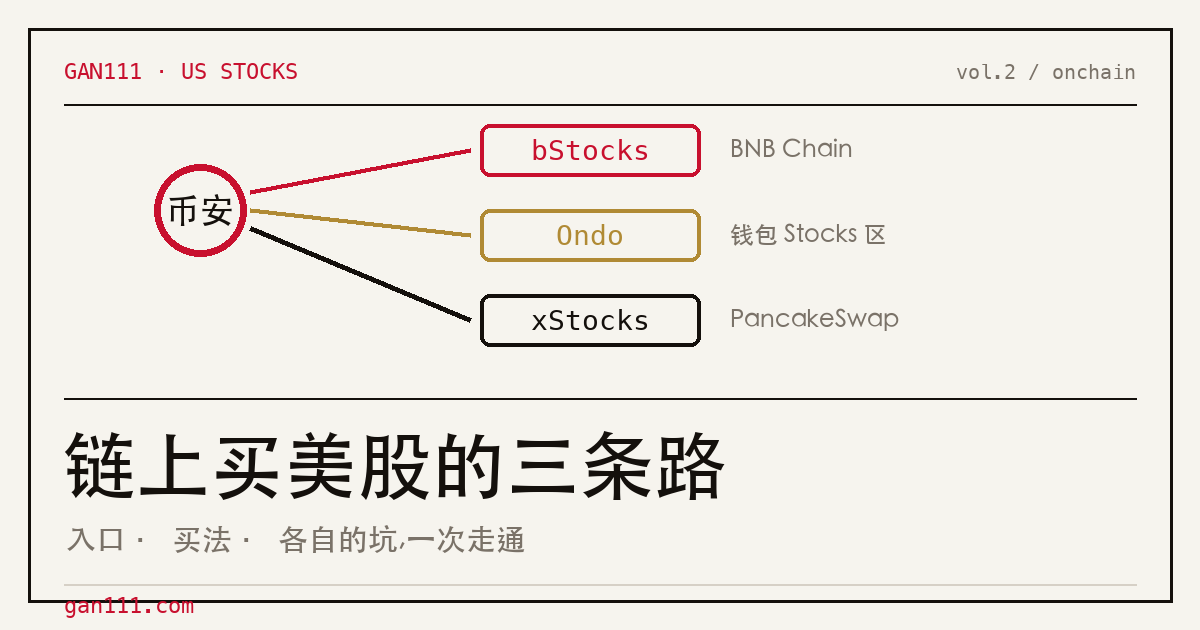
Three on-chain ways to hold tokenized US stocks, and what differs underneath — who issues the token, who holds the share, and what you can actually claim.
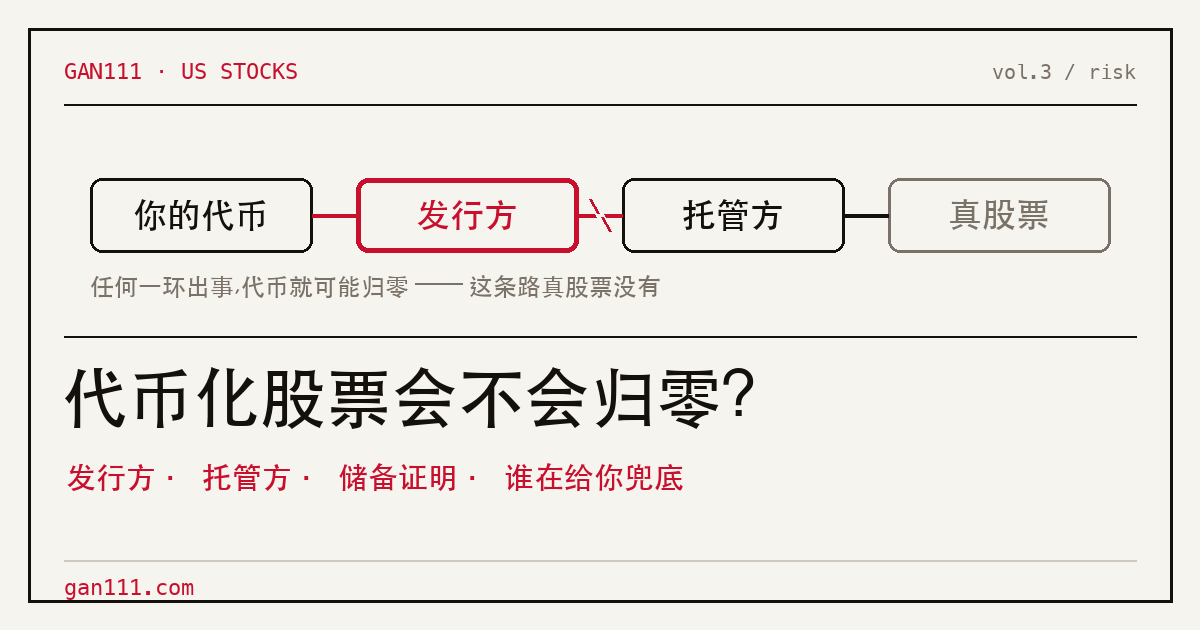
A tokenized share is a claim on whoever issued it. What bankruptcy remoteness actually covers, the three checks worth running first, and why SIPC does not apply here.
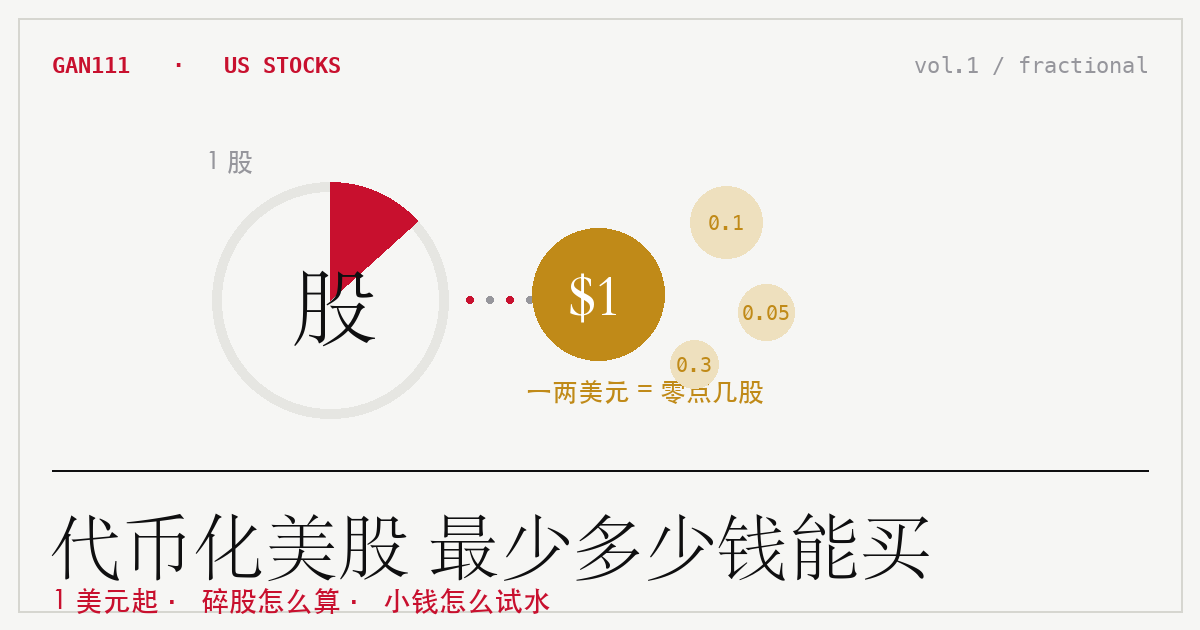
You do not have to save up for a whole share. Fractional orders usually start around a dollar or two, and the exact floor is whatever the order page shows that day.

A perp is a derivative, not tokenized spot. Funding settles every 8 hours and caps at ±2.00%, and a closed US market is no holiday for liquidation. How to price the carry, and who should stay out.

SPYX, QQQon and the bStocks index products read alike but sit on different issuers and buy routes. The tokenized 3x version stacks volatility decay on top of token structure risk.

Arbitrage pulls the price back to the real share while markets are open; once they close, there's no anchor and thin books move more. Where premium and discount come from, and what to check before you order.

bStocks convert or sell on spot, xStocks sell on the secondary market or redeem through Backed — fees, thresholds, and the exit path that actually applies to a retail holder.

Buy bStocks straight from spot, or buy xStocks through your Web3 wallet — same Binance account, two different paths to tokenized US stocks. Here's how they differ.
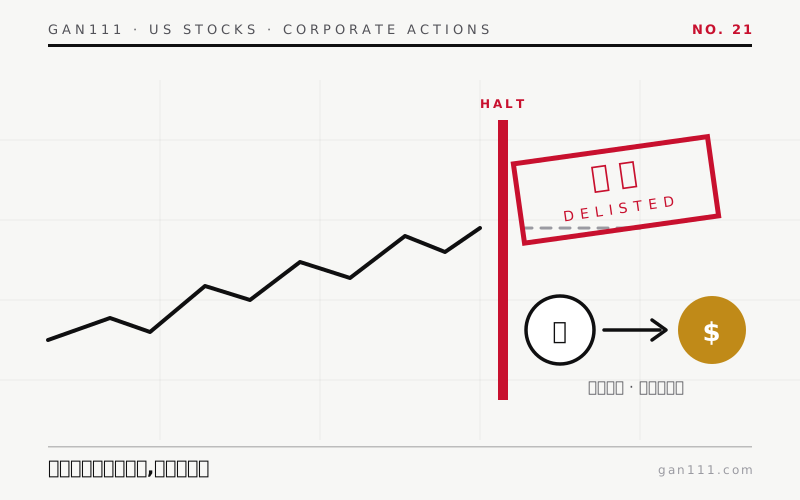
A halt, a delisting or a go-private buyout — what happens to your xStocks-style token? The issuer usually unwinds the shares and pays out in stablecoin.

The Binance app itself does not list tokenized US stocks — xStocks live in Binance Wallet, on Solana. Five steps from funding to your first order.

xStocks run 7×24, so weekends and US holidays stay open for orders. But thin order books, wider spreads and price de-pegging are the half nobody mentions.

Roughly 30% US withholding comes off, the rest is reinvested and the balance grows — no cash is paid out. Splits run through the multiplier on their own, and voting rights are not included.

Smart contracts, staking, Layer 2 — pulled apart one at a time. Plus the moments that shaped it: the 2017 ICO mania, the 2022 Merge, the 2024 spot-ETF approval.

USDT, USDC, DAI, FDUSD side by side. How LUNA's UST died inside a week. What really happened during the March 2023 USDC depeg when SVB blew up.

Lending, DEXs, liquidity mining. A look back at the 2020 DeFi summer and the 2022 LUNA/UST collapse, plus the three flavours of rug pull and how each one ends.

Self-custody vs. exchange custody. First-time MetaMask setup. Why your seed phrase should never live in a screenshot or cloud note. How "approve" phishing works and how to avoid it.

Four numbers per candle. Five patterns that matter — engulfing, morning star, evening star, hammer, inverted hammer. We will not pile 200 indicators on top of price.

5x leverage liquidates on a 20% move. The math is brutal. I walk you through 5·19 2021, the LUNA collapse, and the August 2024 yen-carry unwind so you can feel the leverage cascade.

On-chain data, funding rates, media tone, the Fed — five signals, plus an old-school contrarian one: when people who never talk about investing start asking how to buy, be careful.

2012 / 2016 / 2020 / 2024 — on-chain data, miner behavior, retail composition, side by side, and what it says about 2028.

Is "no RR, no trade" a real rule or trader cosplay? One simple formula, then three ways new traders compute it wrong every time.
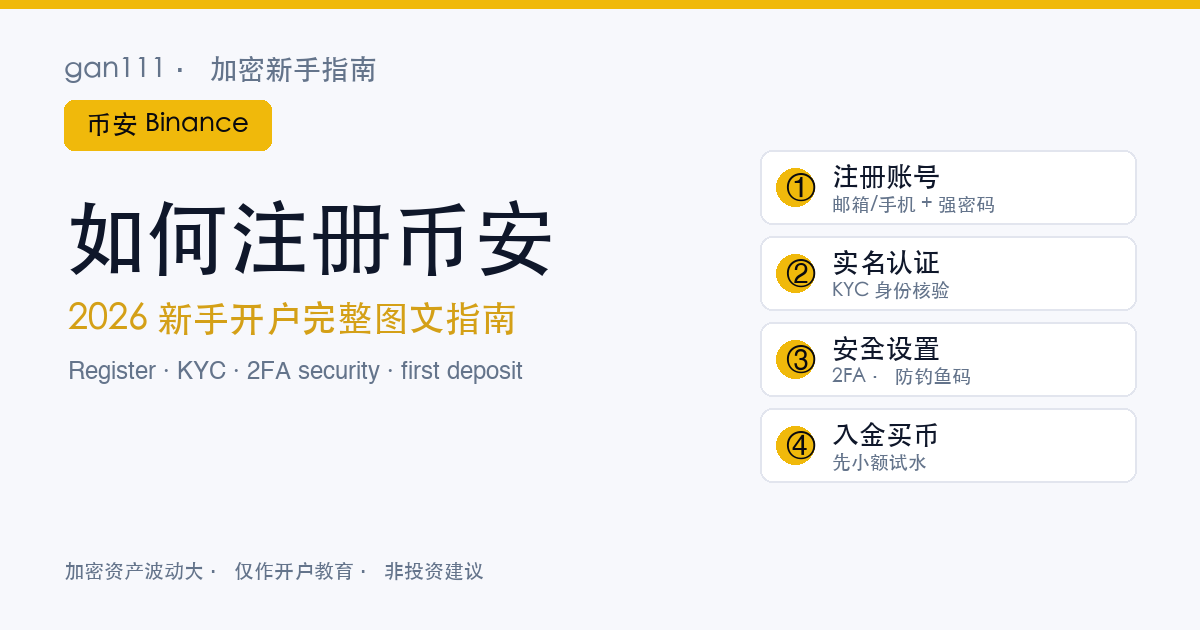
The sign-up takes two minutes; what trips beginners up is everything after. Registration, 2FA security setup, KYC, and your first deposit — in the order a real beginner goes through them, region limits stated honestly.
2010 to today. Daily / weekly / monthly / yearly. All four halvings marked. Log axis, scroll-wheel zoom. Next-halving countdown ticks down live. Data pulled directly from the CryptoCompare API — nothing hard-coded.
Six timeframes (15m / 1H / 4H / D / W / M) clustering recent swing highs and lows into key zones. Refreshes every 5 minutes. Runs entirely in your browser — no account, no tracking pixel on the algo.
BTC market cap as a share of total crypto. The single most useful "where in the cycle are we" indicator. Four threshold zones (super-strong / early bull / alt rotation / alt mania) annotated against past peaks.
 Follow @mor_xiaogan