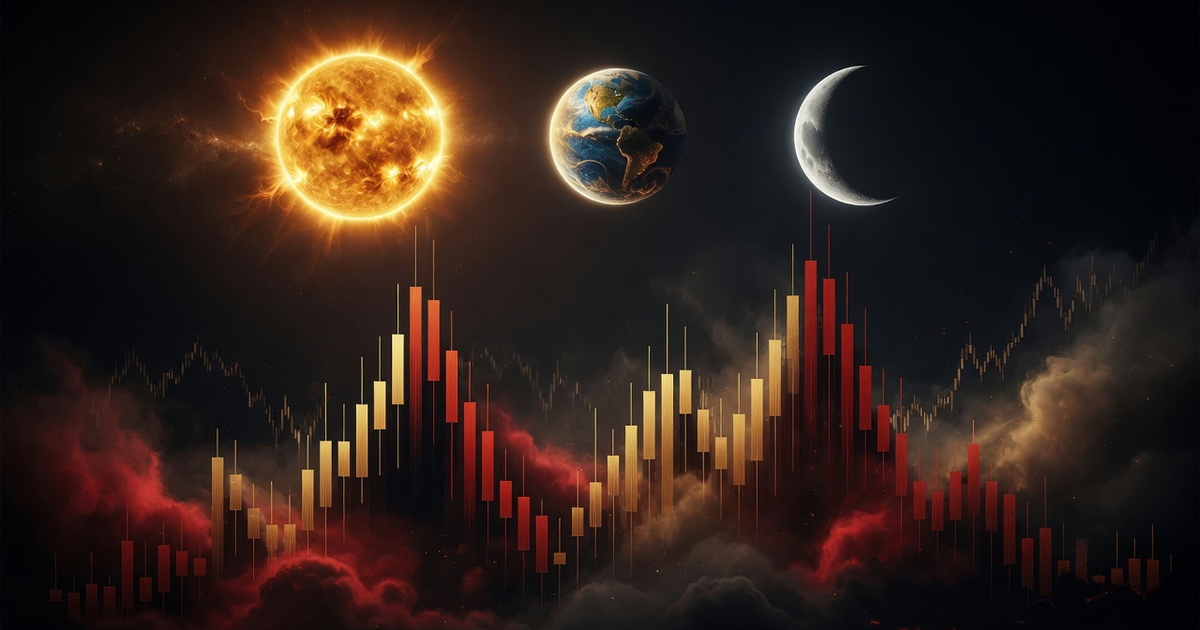
In early July, OpenAI rolled GPT-5.6 out across the board — not one model, but a family of three: Sol, Terra and Luna. If you live on the charts, your first reaction was probably the same as mine: is this naming a deliberate poke at crypto? One collides with Solana, two with the great blowup of 2022. I'll deal with the name clash on its own further down. First, the real business: how the three tiers actually differ, and how to pick one for the job of trading.
What GPT-5.6 is: three tiers, three different jobs
Quick background for anyone who didn't follow the news. GPT-5.6 has been in limited preview since June 26, 2026, became generally available on July 9, 2026, and is now available across the OpenAI API, Codex and GitHub Copilot. Unlike the old "one flagship rules them all" approach, OpenAI split the line into three tiers this time:
- Sol — the flagship, aimed at the hardest work: complex coding and security-research-grade tasks.
- Terra — the balanced workhorse. OpenAI's own framing is that it matches GPT-5.5 in quality at roughly half the price, positioned for large-scale everyday production.
- Luna — the fastest and cheapest, built for summarizing, routing and simple automation at high volume.
OpenAI has already memorized the selection rule for you: reach for Sol when quality comes first, Terra as the cost-effective daily workhorse, and Luna when you need fast and cheap. Everything I suggest below is, at bottom, that rule translated into concrete trading scenarios.
One more thing worth a trader's attention: the "three tiers in parallel" launch is itself a signal. It means AI pricing increasingly behaves like a compute commodity — the same generation of technology, sliced into different price points by quality and speed. The move isn't to chase the flagship on reflex, but to sort your own tasks into layers and give each layer just enough model. That mindset runs through the whole piece.
The three tiers and pricing, in one table
API pricing is per million tokens, as below — this is per OpenAI's official pricing page and is subject to change:
| Model | Position | Input / 1M tokens | Output / 1M tokens | Best for |
|---|---|---|---|---|
| Sol | Flagship · hardest tasks | $5 | $30 | Complex coding, security research, zero-error review |
| Terra | Balanced workhorse | $2.5 | $15 | Daily production, high-volume routine work |
| Luna | Fastest, cheapest | $1 | $6 | Summaries, classification and routing, simple automation |
Two observations. First, Terra runs about half the price of Sol, yet for most everyday tasks the felt difference is far smaller than the price gap — which is exactly why OpenAI is confident calling it the "workhorse." Second, Luna's output price is one-fifth of Sol's, cheap enough that you can run batch jobs on it without wincing at the bill.
As for the benchmark scores on every leaderboard, I'm not quoting a single one. The sources are messy, the methodologies vary, and different leaderboards can reach opposite conclusions. Rather than memorize numbers, take one of your own real tasks and run it across all three tiers — ten-odd minutes gives you an answer more reliable than any ranking table.
The name clash, cleared up: Sol isn't SOL, and Terra/Luna aren't that pair
Right — back to the topic that makes crypto people do a double take. Three names, three clashes:
- Sol collides with Solana's ticker SOL — a top-cap layer-1 token, and the chain that on-chain US equities like xStocks actually run on.
- Terra and Luna collide much harder: in May 2022, the Terra blockchain's algorithmic stablecoin UST lost its peg, and the token LUNA fell from tens of dollars to near-zero within days, wiping out tens of billions in market cap — one of the most brutal collapses in crypto history. Veterans get a physiological flinch hearing those two words.
But let me put it flatly: OpenAI's model names have nothing to do with these crypto projects — it's pure coincidence. Sol, Terra and Luna are Latin for the sun, the earth and the moon — an astronomy set, with no tie to any chain, any algorithmic stablecoin, or that collapse. OpenAI isn't betting on Solana, isn't reviving LUNA, and certainly isn't launching a token. And this isn't the first time tech and crypto have shared a name — words like sun and moon are naming hot spots, and nobody has a monopoly on a Latin word. What deserves your caution isn't the clash itself, but the people who work an angle out of it.
Why give this a whole section? Because a name clash is a traffic magnet. You're about to run into headlines like "Is OpenAI moving into Solana?" or "LUNA reborn through AI," and the seedier play is launching same-name scam tokens or pump-and-dumps riding the buzz. When you see the combination of "an AI concept plus a familiar crypto name," assume it's a hijack first and verify second — the same detection instinct I lay out in the 8 crypto scams piece. When a hot narrative arrives, every old con gets a fresh coat of paint and comes back around.
What traders actually do with it: each tier in its place
Names dealt with, on to the real work. Here's how I'd personally assign jobs to the three tiers — suggestions, not doctrine. Your volume, budget and habits differ, so feel free to swap them around.
One premise first: everything below is "information processing," not "replacing your judgment." AI's correct seat in a trading workflow is compressing a job that used to take you two hours into ten minutes, so you can spend the freed-up time on what only you can do — watch the risk, size the position, get clear on why you're entering. Put it in the wrong seat and the stronger the tool, the faster you lose.
Luna: the first funnel for the news firehose
A trader faces a torrent of information every day: exchange announcements, project tweets, on-chain moves, macro headlines. Luna is cheap and fast, which makes it the ideal coarse filter — compressing a long announcement into three lines, tagging and sorting news, and surfacing the handful of items worth a closer look out of the noise. This work doesn't demand much intelligence but does demand low cost and high speed, which is exactly Luna's home turf.
Terra: the workhorse for reviews and market recaps
Reviewing is Terra's job. Hand it this week's price action and your own trade log, and let it help you structure the logic, spot mistakes, and organize it into review notes; or take a concept you never quite got and have it broken down until it clicks. One point to stress: it can walk you through frameworks like how to read a candle chart and how to call bull versus bear and poke holes in your reasoning — but the judgment stays yours. It organizes; it doesn't make the call.
Sol: for strategy code, where mistakes aren't allowed
Writing quant scripts, backtest frameworks, exchange API integrations — the moment that code is wrong, it's real money: a mis-typed order parameter, position math that forgot the fees, an API key with permissions set too wide, each one an incident waiting to happen. This is worth Sol: have it review your risk-reward and position-sizing logic, check whether your exception handling has gaps, and hunt for security holes. A two-line daily edit is fine on Terra; the full pre-deployment review is where you bring in Sol. Spend the money where it actually matters.
Risks and limits: it's a tool, not an oracle
AI is an information-processing tool, not a market oracle. Any claim that you can "hook up GPT and predict the market for steady profits" is either ignorance or someone after your money. The model doesn't know whether tomorrow goes up or down — it has only reorganized information that already existed.
A few more limits to think through before you use it:
- Hallucination is the norm, not a rare accident. It will hand you wrong prices, fabricated announcements and data that doesn't exist — and it will do so with a completely straight face. Any number or piece of news you plan to base a decision on must be verified against the original source.
- Code that runs isn't code that's correct. AI-written strategy code carries logic errors like any other; paper-trade it and run it small before you trust it.
- Don't feed it sensitive information. API keys, seed phrases, your full position — none of that needs to appear in any conversation.
- You can't outsource the decision. Using AI to organize information is fine, but you can't blame the model when you lose money — you placed the order, and "your own risk" hasn't changed one letter in the AI era.
One last note for anyone planning to run automation through the API: cap your costs. Batch jobs like summarizing and routing on Luna usually cost pennies; but let the model call itself in a loop, or stuff a whole block of history back into the context over and over, and the bill can turn ugly overnight. Work out the unit cost on a small sample first, then scale up.
Bottom line: what this GPT-5.6 wave means for traders isn't a new "predict the market" gadget — it's another drop in the unit cost of processing information. The announcements you couldn't be bothered to organize, the trades you couldn't be bothered to review, can now be run through in batch for a few dollars. A tool stays a tool, and the real arena is still the exchange — to turn the observations AI helped you organize into actual positions, you first need a working account. You can start from the Binance sign-up page with invite code XG188, which comes with a trading-fee rebate. As always: this piece is about tools and limits only and is not investment advice — whether and how much you buy is your own call.
A few questions you'll probably ask
Is GPT-5.6 Sol related to Solana's SOL token?
No connection at all, it is pure name coincidence. GPT-5.6's Sol is OpenAI's flagship model, named after the Latin word for the sun; SOL is the ticker of the Solana blockchain. One is an AI model, the other is a crypto asset. Different entity, different business, different naming origin, so do not let a hype headline pull you off course.
Are Terra and Luna the same Terra/LUNA that collapsed in 2022?
No. What collapsed in May 2022 was the Terra blockchain and its token LUNA, when the algorithmic stablecoin UST lost its peg and LUNA fell to near-zero within days. GPT-5.6's Terra and Luna are simply the names OpenAI gave two of its tiers, from the Latin for earth and moon. They have nothing to do with that chain or that token.
Which tier is most cost-effective for a crypto trader day to day?
For most cases Terra is enough. OpenAI positions it as the balanced workhorse, on par with GPT-5.5 at roughly half the price, which suits market recaps, post-trade reviews and strategy discussion. Hand simple high-volume jobs like news summaries to the cheaper Luna, and save the most expensive Sol for tasks that cannot afford a mistake, such as reviewing strategy code. Pricing is per OpenAI's official page.
Can GPT-5.6 predict crypto prices?
Do not count on it. It is an information-processing tool, not a market oracle — it can help you organize material, structure your reasoning and check code, but it does not know whether prices go up or down tomorrow. It will also state wrong numbers and made-up news with total confidence, which is called hallucination, so treat its output as a draft, verify anything important yourself, and own your trading decisions.
Read next: 8 crypto scams I have seen · How to call bull vs. bear · Buying US stocks with USDC